
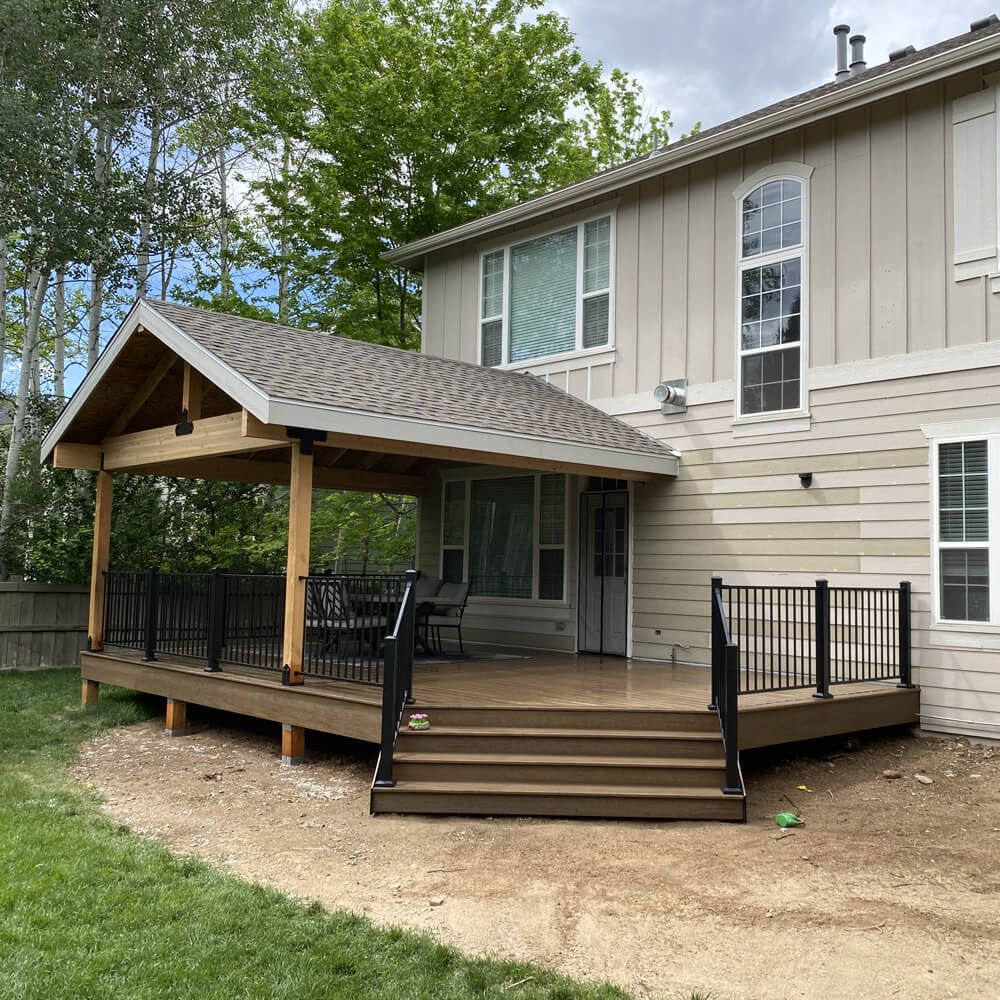
A deck in Fort Collins or Loveland takes more UV than the same deck at sea level, and the finish is the first thing to show it. Knowing how often to stain a deck here saves you from two costly mistakes: recoating after the wood has started breaking down, or paying for stain when the boards really need repair. If you'd rather hand it off, our professional deck staining work starts with a review of the existing finish and the deck's condition.
Quick Answer: How Often to Stain a Deck
Plan on every 1 to 3 years for clear or lightly tinted finishes, and every 2 to 4 years for one coat of semitransparent stain on new, smooth wood. Those USDA Forest Products Laboratory figures are for vertical surfaces like siding, and decks wear faster, so plan around the short end. Recoats often last longer, because weathered wood soaks up more stain. If the finish is peeling or the boards are soft or split, you're past a simple recoat.
Why Northern Colorado Is Hard on Deck Stain
Sunlight starts the damage. The Forest Products Laboratory's Wood Handbook says UV radiation in sunlight starts the breakdown of wood at the surface, and that moisture, temperature change and freeze-thaw cycles make it worse.
Elevation adds to the load. NOAA's Climate Prediction Center explains that less of the sun's UV gets scattered away before it reaches the ground up high, so there's more UV radiation at higher elevations than at lower ones. That's extra wear on every board, every sunny day.
Not every part of a deck wears at the same rate, though:
- South- and west-facing decks get more sun, so they tend to need attention first.
- Shaded sections can go longer. The Handbook notes that the shaded side of a structure may not need re-staining nearly as often as the sunny side.
- Foot traffic matters too. Plan touch-ups around sun and traffic, not just the calendar.
How Often to Stain a Deck, by Finish Type
The finish on your deck matters more than any rule of thumb. Here's what the Forest Products Laboratory reports for penetrating finishes:
- Clear water-repellent preservatives: about 1 to 2 years.
- Lightly pigmented, tinted finishes: about 2 to 3 years.
- Semitransparent stain, one coat on new smooth wood: about 2 to 4 years.
Later coats of penetrating stain often outlast the first one, because the stain gets into the porous, weathered surface. Two caveats, though. These are general figures for exterior wood, and the Handbook's own service-life table is based on vertical exposure, like siding. A deck floor takes rain and sun head-on, so it's sensible to plan around the short end of each range. And lighter, more transparent stains may need freshening more often than heavier ones.
Why Solid Stain Is a Bigger Commitment
Solid and semi-solid stains carry more pigment, and they can help older decks or boards with visible imperfections look uniform. The trade-off is that a solid stain behaves more like paint. The Wood Handbook says solid-color stains form films and will be prone to peeling just like paint, and it calls decks very difficult to maintain with a film-forming finish. Going back to a see-through stain later isn't simple either, because nothing will penetrate areas that still have a film on them. Weigh that before you pick the color chip.
What Most Guides Miss: Don't Let a New Deck Weather First
It's classic advice: leave a new deck bare for a season before you finish it. The Wood Handbook singles out the advice to let your deck weather before painting it and says, "This was good advice at the time but is now the source of much pain." It notes that bare wood that sees even a week of south-facing sun can have significantly lower paint performance than fresh wood.
That warning is about film-forming finishes like paint and solid stain. Penetrating stains are more forgiving and seem to perform about the same on sun-damaged or sound wood. Either way, the Handbook's goal for a deck is simple: water should bead up on the surface rather than soak in right away.
One exception. Treated lumber is sometimes still soaking wet when it's delivered, and nothing will coat wet wood well. In that case the Handbook says to wait until the wood dries and use a penetrating finish rather than a film-forming one.
Stain or Restore? How to Tell What Your Deck Needs
A fresh coat is the right call when the finish has faded or worn thin. Per the Handbook, penetrating finishes have to be refreshed every few years as they wear and the wood loses water resistance, and refinishing them is mostly a matter of brushing off dirt and loose fibers and re-staining. Here's a quick check: splash some water on your sunniest boards. If it beads, the finish is still working. If it soaks in right away, it's time. If the finish is peeling, plan on more prep than a fresh coat: the Handbook says to remove a cracked or peeled finish and sand the wood before refinishing.
It's a bigger job when you see any of these:
- Soft spots or rot under railings and along boards.
- Railings or stairs that need securing.
- Heavy checking and splitting. The Handbook notes that wooden decks are most commonly replaced because of checking and splitting, not decay.
At that point, a full deck restoration makes more sense than another coat. Ours includes deep cleaning, sanding, board and railing repairs, and staining and sealing, and we repair or replace damaged boards and secure railings, stairs and fasteners before any finish goes on. On a staining job, if the inspection turns up structural issues, we note them and provide a separate estimate if needed.
Deck Staining FAQ
Should I use a clear sealer or a stain?
It depends on how long you want between coats. On vertical surfaces like siding, the Handbook puts clear water-repellent preservatives at about 1 to 2 years, depending on the wood and exposure, and lightly tinted finishes at about 2 to 3 years, though it says they lack enough pigment to stop UV damage to the wood. Decks wear faster than that. Almost all pigments block UV, and oil-based semitransparent stains carry more of it than tinted finishes do, so they give more protection.
Is it worth restaining an old deck instead of replacing it?
Often, yes, if the structure is sound. The Handbook says decks are usually replaced because of weathering, not decay, and that water repellents, penetrating stains or other coatings can greatly extend the life of a deck. Keeping water beading on the surface is how it says wood can reach 40 or more years of service life.
Does every part of the deck need restaining at the same time?
Not always. Sunny sections weather faster than shaded ones, and when part of a surface has weathered less than the rest, the Handbook says to feather the new stain into the old. Clean and check the deck each spring, and restain the boards that need it.
Final Thoughts on How Often to Stain a Deck
Short version: clean and check your deck each spring, recoat when water stops beading, and don't let peeling or soft boards ride another season. Country Construction has served Northern Colorado since 2007, and owner James Westers has been recognized as a Gold Star Installer for Lowe's of Fort Collins for multiple years. Not sure whether your deck needs stain or something more? You can request a free estimate and we'll help you sort it out.